
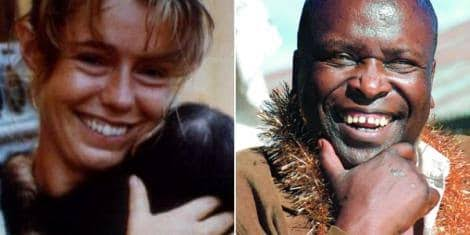
The story of Julie Ward remains one of Kenya’s most troubling justice failures, and new information suggests that attempts to hide the truth went far deeper than many believed.
The case now shows how powerful individuals and state agencies worked for years to silence a grieving family that refused to give up. Recent revelations have uncovered a secret payment made by the Kenyan government to Julie’s father, raising more questions about a scandal that has refused to fade away.
In 1997, the government quietly sent Ksh120 million to John Ward, Julie’s father. The payment was never declared publicly and was handled in a way meant to avoid any public attention. Reports indicate that British intelligence helped facilitate the transaction.
Officially, the money was said to cover John’s expenses during his long struggle to uncover what happened to his daughter.
However, those familiar with the case suggest the real intention was to push him to step back from demanding a full and honest investigation into the murder.
Despite receiving the payment, John continued his fight until his death in 2023, showing that money could not erase his determination.
Julie’s death has long been tied to former President Daniel arap Moi’s son, Jonathan Moi. For years, he denied being anywhere near the Maasai Mara at the time Julie was killed in 1988. But evidence discovered later contradicted his statements.
A handwritten record from a camp official confirmed that Jonathan was in the area. Julie’s brother only found this document decades later, raising the possibility that such evidence had been kept hidden intentionally.
Jonathan died in 2019 without ever being questioned in a meaningful way, leaving behind suspicions that he was protected from facing justice.
The investigation also suffered from interference in the medical findings. Egyptian pathologist Dr. Adel Shaker initially reported that Julie had died from a clean, deliberate cut, which pointed to murder.
His report was later changed by his superiors. Shaker was pressured into signing a false version suggesting Julie’s injuries came from an animal attack or lightning.
Fearing for his safety, he fled Kenya. His account revealed the harsh reality of working in a system where truth could be altered to protect powerful interests.
Attempts to prosecute lower-level individuals also led nowhere. Charges against game wardens and a head ranger collapsed, with courts saying there was not enough evidence.
John Ward believed this was intentional and that both Kenyan and British authorities were unwilling to expose those connected to the Moi regime. The secret Ksh120 million payment strengthens that belief. It suggests the state chose silence over justice, preferring to protect its own.
Decades later, new evidence and the exposure of the covert payout have brought the case back into public focus. The truth remains buried under years of intimidation, secrecy, and political shielding, but the renewed attention shows that some stories cannot simply be erased.