
President William Ruto’s recent remarks continue to attract scrutiny as he stands by his position on the controversial issue of police responses during violent protests.
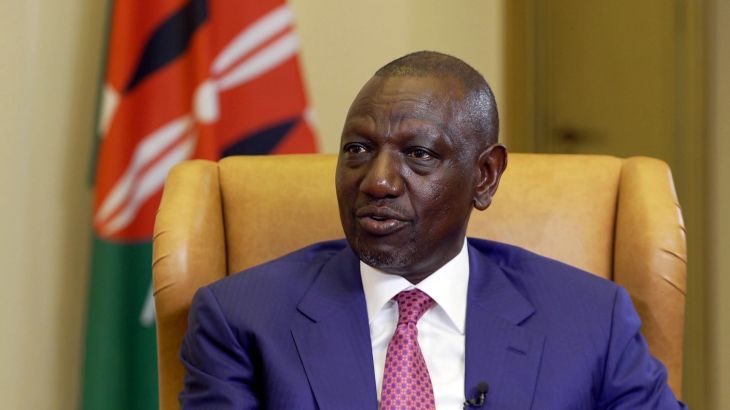
His comments, made during an interview with Al Jazeera, have renewed national debate as he defended the tough stance he adopted earlier in the year.
Ruto restated that he has no regrets about telling police to shoot protesters targeting strategic government installations in the leg, arguing that it was a measure grounded in the law and intended to safeguard order at a time when tensions were high.
He explained that security agencies have a duty to protect both public property and the rights of all citizens, including individuals participating in lawful demonstrations. According to him, the country’s legal framework gives officers room to exercise force when lives are at risk, and his statements were simply a reinforcement of this mandate.
Ruto stressed that police officers are trained, know their obligations, and understand the limits of their authority. He characterized his earlier message not as a command, but as a reaffirmation of his commitment to stability during periods of unrest.
Ruto also took time to address criticism from sections of the Kenyan media that accused his government of embracing authoritarian methods. He dismissed these claims and said the media would continue to operate freely, even when they publish views that sharply oppose his administration’s actions.
To him, media freedom remains intact, and difference of opinion is part of a functioning democracy. He insisted that criticism alone cannot be taken as proof of state overreach or an attempt to restrict public discourse.
Concerns over police misconduct were also raised during the interview, especially following incidents that resulted in injuries and loss of life, including the death of teacher and activist Albert Ojawang’.
In response, Ruto emphasized that the government does not tolerate indiscipline in the police service. He acknowledged that in a force of thousands, there will always be individuals who act outside the law, which is why disciplinary systems exist. He pointed out that accountability measures are in place and will continue to be applied to ensure that rogue officers do not operate with impunity.
The July incident at the launch of the Police Housing Project in Kilimani remains a reference point in this debate. It was there that Ruto issued the now-famous warning that anyone storming private businesses or police stations should be shot in the leg before facing the justice system.
That declaration immediately split public opinion, with human rights defenders calling it a blatant approval of excessive force, while supporters praised it as a necessary stance against lawlessness that had threatened to spiral out of control.