

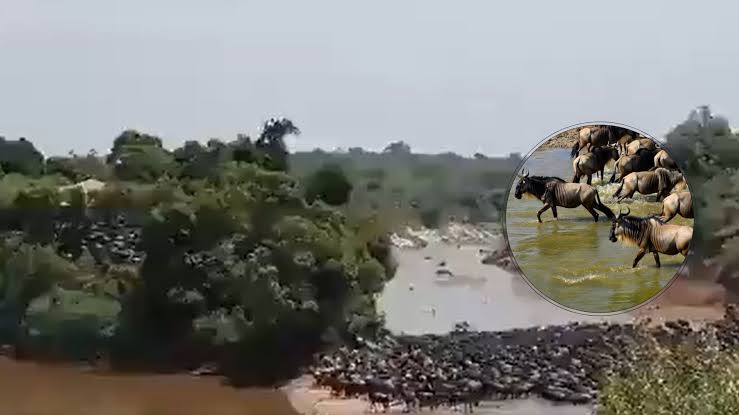
The debate surrounding the fate of the wildebeest migration in the Maasai Mara has grown more intense after a recent presidential directive allowed The Ritz-Carlton to put up structures within a key migration corridor.
This decision has left many Kenyans, conservationists, and community leaders worried about the long-term consequences for one of the world’s most iconic wildlife events.
The migration, which brings together millions of wildebeests, zebras, and other animals moving between the Serengeti and the Mara, has always been celebrated as a natural wonder that draws visitors from across the globe.
Now, many fear that the fragile balance supporting this spectacle is under threat.
Environmental experts say the construction of a luxury facility in such a sensitive area could change the natural behavior of wildlife. They warn that blocking or narrowing the animals’ traditional routes would disrupt their movement patterns, increase stress on the herds, and damage the wider ecosystem.
For years, the corridor has served as a safe passage for animals escaping predators, seeking fresh grazing grounds, and completing their natural cycle. Any interference, they argue, could weaken the migration and eventually alter its rhythm or scale.

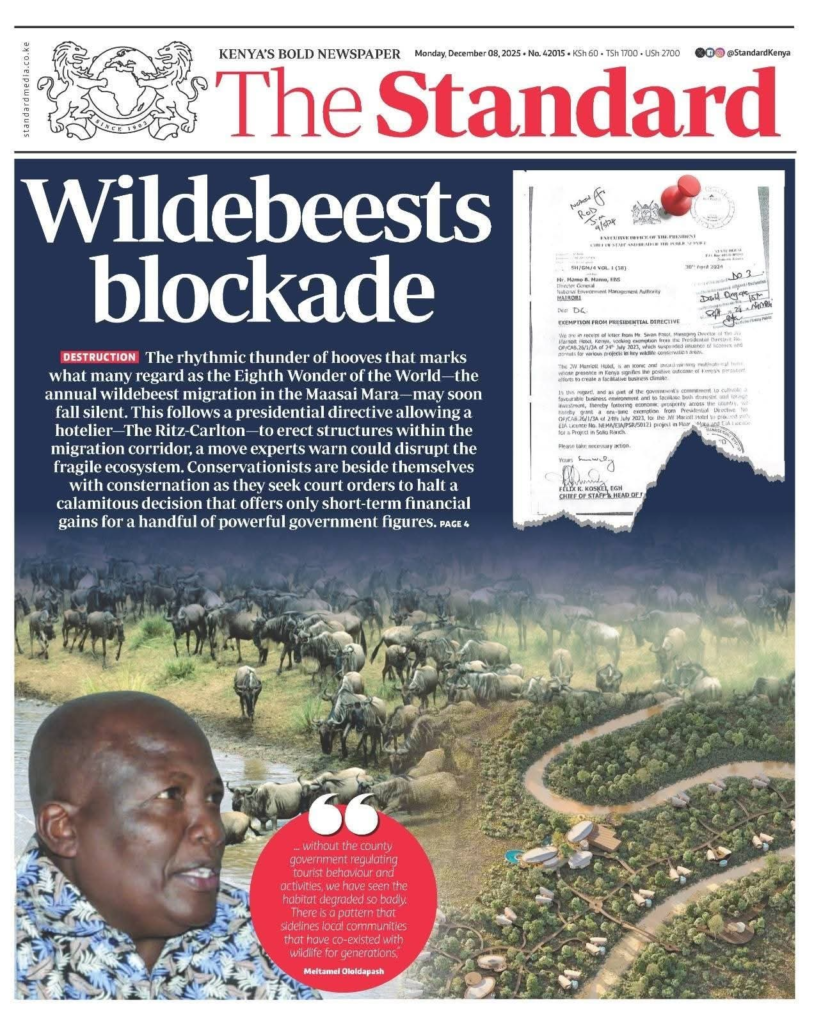
Several conservation groups have openly criticized the decision, saying it prioritizes private interests over national heritage. They believe Kenya risks losing far more than it stands to gain from a high-end hotel.
According to these groups, the long-term impact on biodiversity, water sources, and vegetation could be severe if construction continues unchecked. They also point out that once a development begins inside a protected area, it often opens the door for further encroachment, making it harder to control future activities.
The concerns are not limited to conservationists. Local community members, especially the Maasai who have lived around the Mara for generations, feel increasingly sidelined.
Melitamel Olekaipasha, a respected community leader, said the region has already faced serious habitat damage due to poorly monitored tourist activities. He explained that many local families depend on the health of the land and wildlife for their livelihoods, and any policy that ignores their role puts both culture and conservation at risk.
His worry reflects a growing feeling among communities that decisions affecting their land are being made without meaningful consultation.
The matter has now shifted to the legal arena, where environmental groups are pushing for the project to be halted until a detailed environmental impact assessment is completed.
They argue that such an assessment is not optional but essential in understanding the full consequences of the proposed development.
Their hope is that the courts will recognize the importance of protecting the migration corridor and ensure that all decisions follow both scientific guidance and the law.