

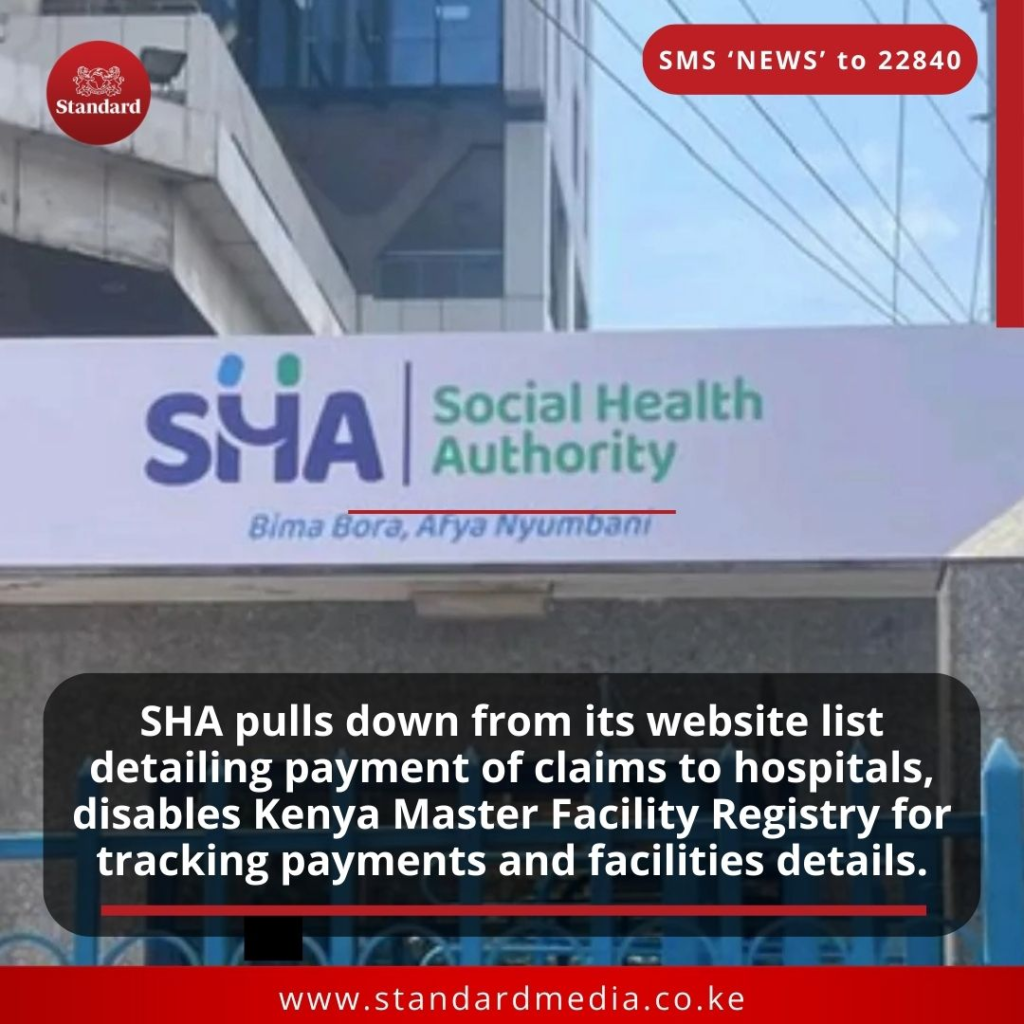
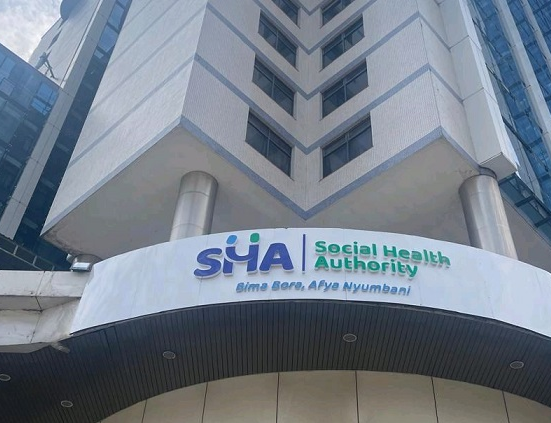
The Social Health Authority has found itself at the center of a storm after removing from its website a list that detailed payments of claims to hospitals.
This action has caused concerns over accountability in the management of the new health insurance scheme, which was expected to bring better services to Kenyans.
Adding to the controversy, SHA has also disabled the Kenya Master Facility Registry, an online portal that was useful for the public to track payments and verify details of registered facilities.
This step has fueled public suspicion at a time when questions over ghost hospitals and irregular payments have been dominating discussions.
The decision to pull down the list has been criticized by many health sector stakeholders who argue that removing information instead of addressing the allegations only raises more doubt.
Civil society groups say such actions weaken the trust between the government and the people, especially when taxpayers’ money is involved. For Kenyans who were promised more transparency and accountability after the collapse of NHIF, the developments are deeply worrying.
The SHA had been introduced with the pledge of ending past inefficiencies, but the removal of the records has instead brought back old fears of misuse and mismanagement of funds.
The matter has escalated further due to claims that some of the hospitals receiving payments under the scheme are either ghost facilities or institutions that do not exist on the ground.
Reports of money flowing to such places have sparked outrage and immediate calls for investigations. Civil society organizations, anti-corruption watchdogs, and even professional groups in the health sector are now urging the Ethics and Anti-Corruption Commission together with the Directorate of Criminal Investigations to move quickly and unearth the truth.
They argue that any misuse of billions meant for healthcare could directly affect millions of Kenyans who depend on public health insurance to access treatment.
Hospitals and patients are also already feeling the uncertainty created by this controversy. With the list pulled down and the registry disabled, hospitals are struggling to follow up on claims while patients are left unsure about their coverage.
Health workers’ unions fear that this confusion could eventually affect service delivery, with some facilities unable to sustain operations if payments are delayed or irregular.
For many Kenyans living in rural areas, where options are limited, this would mean longer suffering and reduced access to health.
The silence and lack of transparency have only deepened mistrust, making many feel that the new scheme risks falling into the same pitfalls that destroyed the NHIF.



Leave feedback about this