
The Independent Electoral and Boundaries Commission (IEBC) has unveiled plans to introduce new election campaign financing regulations that will require politicians and political parties to fully disclose and account for all donations and contributions received during election campaigns.
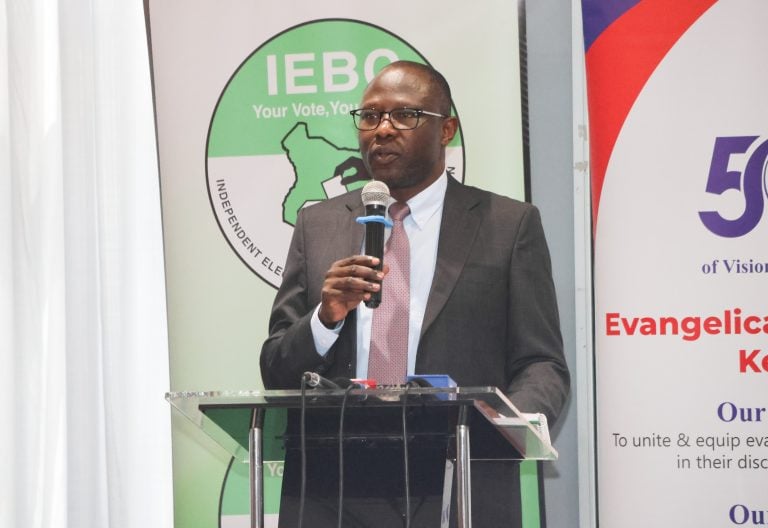
Speaking on Thursday, July 30, during a stakeholder engagement meeting on the Draft Election Campaign Financing Regulations, 2026, IEBC Chairperson Erastus Ethekon said the commission is working to finalize consultations and publish the regulations by August in line with the required timelines.
The proposed rules are designed to improve transparency, accountability and fairness in the way election campaigns are funded in Kenya.
According to Ethekon, the commission has spent the past months consulting different stakeholders to refine both the regulations and campaign spending limits before they are officially adopted.
If approved, all candidates and political parties will be required to appoint authorized individuals who will be responsible for handling campaign finances. They will also be required to open specific campaign bank accounts through which all campaign-related funds will be received and managed.
The IEBC believes that the use of dedicated campaign accounts will make it easier to monitor how much money is being used during campaigns and whether candidates are operating within the spending limits set by law.
The move is expected to strengthen oversight and reduce concerns about unregulated campaign financing.
The draft regulations will also require candidates and political parties to maintain detailed records of every contribution and donation received from individuals, companies and organizations.
These records will then be submitted to the commission for review.
Ethekon said the proposal is similar to practices used in other democratic countries where political donations are publicly declared to promote openness and public confidence in elections.
He noted that understanding who funds political campaigns is an important part of ensuring accountability in the electoral process.
Beyond donations, the regulations will establish a framework for monitoring campaign expenditure. This will allow the commission to determine whether any candidate or political party has exceeded the legally allowed spending limits during campaigns.
According to the IEBC, the proposed contribution and expenditure limits are intended to create a fair environment where candidates can compete on a more equal footing regardless of their financial strength.
During the same event, Ethekon also addressed reports suggesting that the commission was planning to stop live-streaming election results.
He dismissed the claims and assured Kenyans that the IEBC remains committed to transparency.
He emphasized that the media will continue playing its important oversight role by monitoring the electoral process and reporting election results, adding that openness remains a key principle in the commission’s work as the country prepares for future elections.