
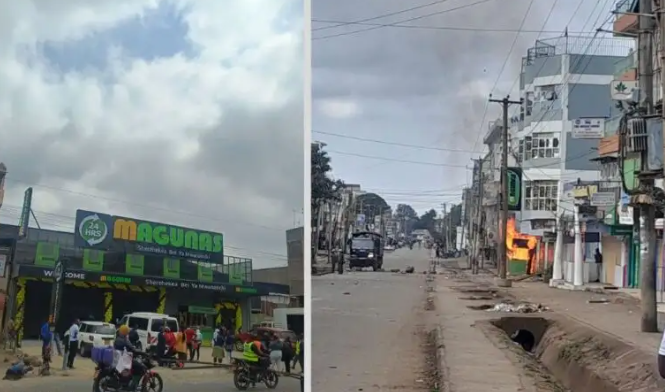
The arrest of three people in Meru following the July 7 Saba Saba protests is being paraded as a major breakthrough by the police, but the bigger question remains why were the police absent or ineffective when the chaos broke out in the first place?
Instead of taking responsibility for failing to prevent the attacks, law enforcement is now using CCTV footage to chase suspects days after lives were disrupted and businesses destroyed.
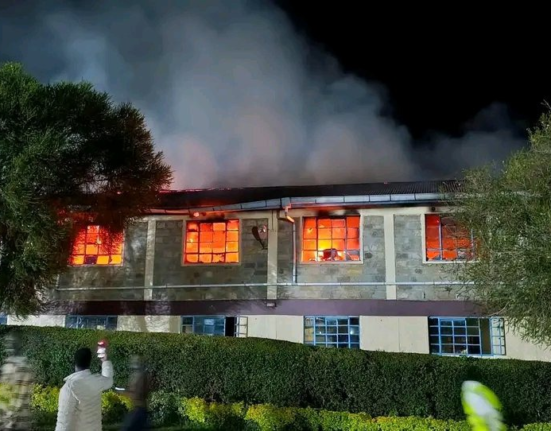
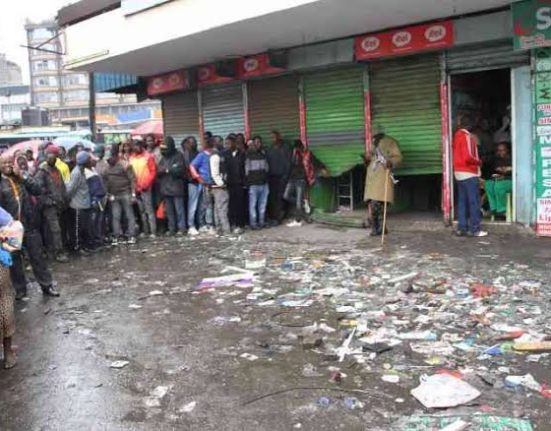
The same officers now bragging about their “well-coordinated operation” were nowhere to be seen when Magunas Supermarket was being torched and Seven Eleven Lounge was being looted.
What happened to rapid response and crowd control strategies?Police claim to have conducted a thorough investigation based on intelligence, yet their failure to protect public and private property on that day shows they either lacked intelligence or simply ignored the signs.
The situation in Makutano spiraled out of control while officers stood by or arrived far too late.
Even the Meru County fire truck, which should have received police escort and protection, was left exposed. It was pelted with stones by angry crowds after it failed to deliver water in time.
In another disgraceful incident, a Kenya Red Cross vehicle offering humanitarian assistance was vandalized. These are not just stories of failed security they are proof that when citizens needed safety the most, the police vanished.
Adding to the outrage, a viral video has been making rounds online showing uniformed police officers seemingly involved in the looting and chaos at Magunas Supermarket.
Instead of launching an internal investigation into the officers caught on camera, authorities have chosen to parade the arrest of civilians.
This has raised serious doubts about the credibility of the entire operation. Why are the suspects facing charges while police officers, clearly seen participating or standing by during the destruction, walk free?
The double standard is blatant and only deepens public mistrust in law enforcement.The claim that law enforcement is committed to restoring order rings hollow when you look at the timeline of events.
The arrests happened after the damage had already been done. Businesses were looted, livelihoods destroyed, and public trust in safety forces severely damaged.
What should worry Kenyans more is not whether three people are arrested after the fact, but how vulnerable their towns remain in the hands of an unprepared or indifferent police force.
A few recovered items or a seized motorcycle is not justice it is public relations.
Even in Kirinyaga and Nakuru, the police were reactive rather than proactive. Protesters in Kirinyaga broke supermarket windows, while in Nakuru, officers only arrived after a break-in had started.
If officers had done their job at the beginning, many businesses wouldn’t be nursing losses today. Saba Saba Day may have brought out opportunists, but the failure lies squarely on the shoulders of the state forces tasked with upholding law and order.
Instead of blaming protesters and rounding up suspects one by one in showy operations, the police should explain why they allowed thugs to operate freely for hours.
The arrest of a few individuals may look like progress, but it cannot cover up the shameful truth the Kenyan police failed to protect Meru, and by extension, the nation.
The viral clip showing possible police involvement at Magunas only adds insult to injury. Until law enforcement is held to the same standard they impose on citizens, more protests will mean more chaos, and innocent Kenyans will remain exposed.