
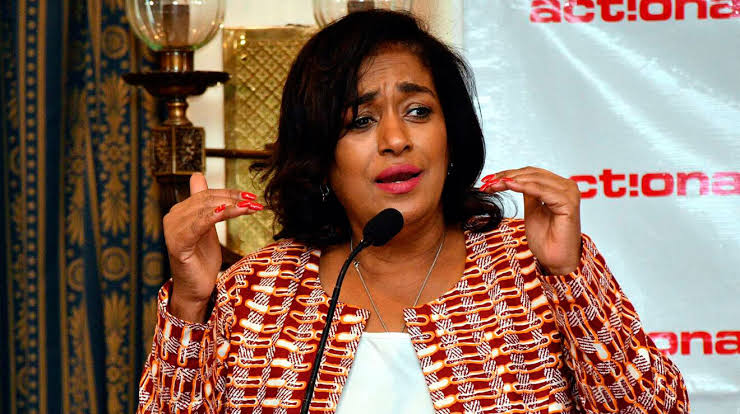
Esther Passaris has found herself at the center of public criticism after defending police officers accused of looting during the recent Gen Z protests in Nairobi.
Her remarks, which suggested that the officers were recovering stolen laptops and not stealing them, have drawn sharp reactions from both citizens and civil society groups.
Many see her statements as reckless and as an attempt to obstruct justice, especially at a time when there are serious questions about the conduct of law enforcement officers.
Viral videos from the protests show police carrying away electronics, which fueled suspicions that they were involved in looting rather than protecting property.
Passaris posted on X where she said, “Let’s be fair. The police did not steal laptops. They recovered them after businesses were looted by goons.” She went on to say that people were quick to judge officers who were working under difficult conditions to control the chaos.
But this defense did not sit well with everyone. While some believe she is trying to protect the image of the police, others accuse her of helping cover up misconduct. Human rights organizations and concerned Kenyans have since called for an independent investigation into the police’s actions during the protests.
Many people believe that without a proper inquiry, it would be wrong to dismiss the video evidence circulating online.
Despite the backlash, Passaris also used the moment to push for reforms in the police force. In a statement posted on her X account, she said, “I attest we urgently need police reforms. But let’s not forget: The Kenya Police are not aliens. They are our fathers. Our mothers. Our sons. Our sisters. Our neighbours.” She believes that real change will come from within and encouraged young people to consider joining the police service to help transform it.
Her suggestion that critics should step up and be part of the solution by becoming officers themselves was seen by some as a bold challenge but by others as out of touch with the real issues of abuse and lack of accountability.
Beyond the protests and the police debate, Passaris has also had to deal with personal attacks, especially from public figures like Miguna Miguna. In the past, he insulted her on live TV, calling her a “socialite bimbo” and falsely claimed she went on a “sex holiday” with her party leader.
Passaris hit back at these remarks, calling them slanderous and misogynistic. She said, “This isn’t criticism. It’s slander. It’s the kind of misogyny women in public life face daily.” Her response highlighted the additional burden that women in politics often carry when their character is attacked instead of their ideas being debated. She also made it clear that those who claim to fight for truth and justice should not resort to lies and insults to bring down others, especially women.
The overall reaction to Passaris’s defense of the police has been divided.
Some appreciate her efforts to humanize officers and push for reforms, while others believe she is trying to divert attention from serious allegations.
Her call for reforms is timely, but many believe it should be followed by clear actions, including holding rogue officers accountable.






Leave feedback about this