
Kenya’s online space has lately become a center of heated debates about the country’s justice system.
Many Kenyans feel that the judiciary has failed to provide equal treatment to all citizens, and their frustrations have been amplified by recent events.
Among the loudest voices is that of Maverick Aoko, whose real name is Aoko Otieno. She has gained a reputation on social media for her sharp and fearless posts calling out corruption and unfair practices.
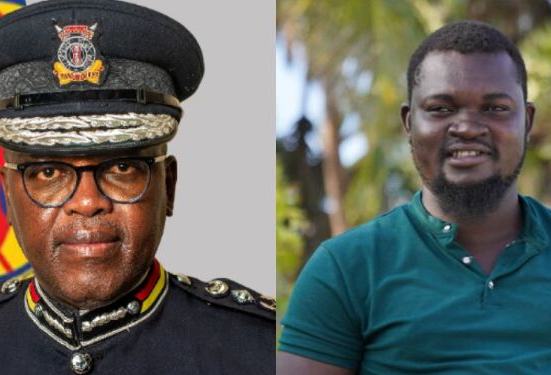
Her latest focus has been on the controversy surrounding Eliud Lagat, the Deputy Inspector General of the Kenya Police, and the tragic death of blogger and teacher Albert Ojwang.
Ojwang was arrested in June 2025 after Lagat accused him of defamation. He was taken to Nairobi’s Central Police Station but never made it out alive. While police first claimed he had taken his own life, an autopsy revealed injuries consistent with a violent assault.
This sparked protests and widespread anger, as many Kenyans believed he had been killed while in custody. Although three officers were charged with murder, Lagat was quickly cleared of any direct role, something that raised questions about how thorough the investigation really was.
Lagat’s position also created confusion. Reports suggested he had stepped aside during the uproar, and the police chief even apologized for the misleading first explanation of Ojwang’s death.
Yet Lagat later said he had not resigned but was only on leave, before quietly returning to his office.
This move fueled public anger and led to fresh demonstrations demanding accountability. Human rights groups labeled Ojwang’s death as another clear sign of police brutality in Kenya, adding to long-standing concerns about abuse of power.
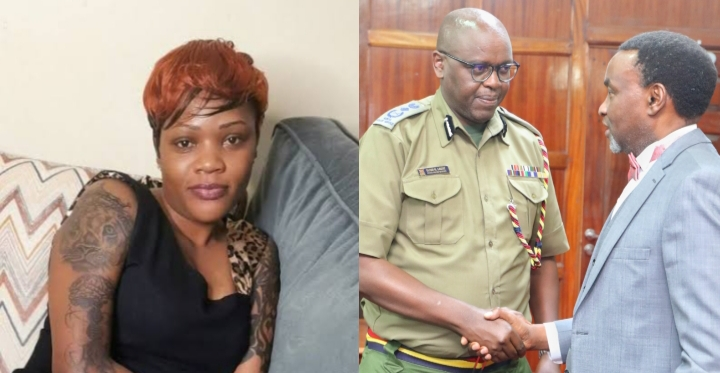
The matter escalated further when Aoko shared photos of Lagat walking side by side with Justice Kanyi Kimondo, the judge hearing a lawsuit that seeks to remove Lagat from office.
She accused the two of having a close friendship, which she argued was a conflict of interest. Her posts highlighted how such relationships could compromise the fairness of court rulings.
Many Kenyans online echoed her views, saying justice becomes meaningless when judges and accused officials appear to be allies.
Aoko also extended her criticism to Chief Justice Martha Koome, accusing her leadership of allowing favoritism to thrive in the judiciary. While she acknowledged a few judges she considered fair, her overall message was that the system has failed ordinary citizens.
The controversy has left Kenyans questioning the integrity of both the police and the courts. Ojwang’s family continues to mourn, while activists demand deeper reforms to prevent similar tragedies.
Voices like Aoko’s keep the issue in the spotlight, pushing the public to reflect on whether justice in Kenya truly serves everyone or only protects the powerful.