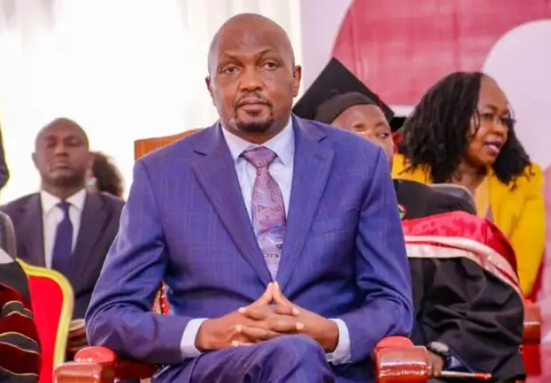

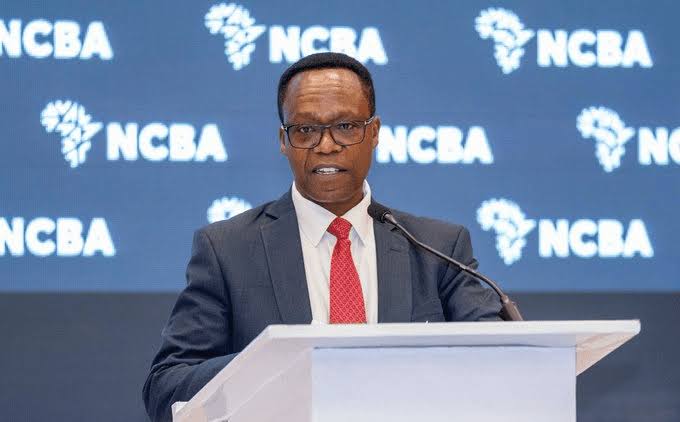
NCBA Group CEO John Gachora has obtained a High Court order stopping his prosecution over allegations linked to a Sh363 million fraud case involving First Assurance Investment Company Limited.
The order was issued by Justice Gregory Mutai ahead of Gachora’s scheduled plea, temporarily preventing the Director of Public Prosecutions and other state agencies from arresting, charging or compelling him to appear in court.
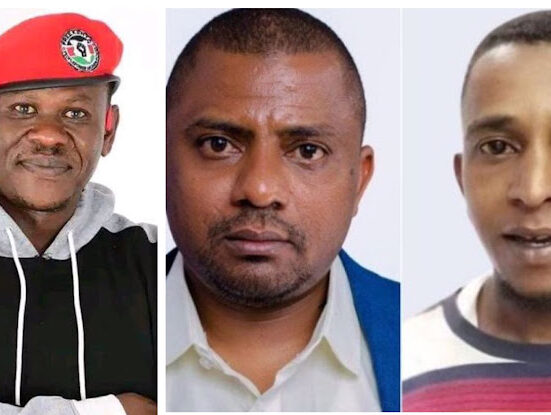
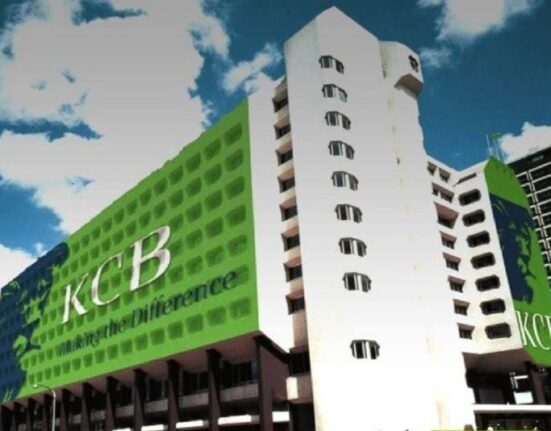
Gachora is facing the case alongside KCB Group CEO Paul Russo and Co-operative Bank CEO Gideon Muriuki. The three executives are accused of failing to report suspicious transactions as required under the Proceeds of Crime and Anti-Money Laundering Act.
The case relates to alleged theft of Sh363 million from First Assurance Investment Company Limited between May 2018 and April 2024.
Former nominated MCA Salim Mohamed Busaidy is the main suspect in the alleged fraud. Busaidy was a director of the company together with Lamu Governor Issa Abdalla Issa.
According to the prosecution, Busaidy allegedly forged the governor’s signature on company cheques and used the cheques to withdraw money from accounts held at NCBA, KCB and Co-operative Bank.
He is also accused of using some of the money to acquire assets.Busaidy faces 120 charges, including conspiracy to defraud, stealing and acquiring proceeds of crime.
He has pleaded not guilty to the charges.The case against the three bank CEOs is different. They are not accused of stealing the Sh363 million. Instead, prosecutors allege that they failed to ensure that suspicious transactions were reported to the relevant authorities.
This is an important part of the case because banks have legal obligations to monitor transactions and report activity that may be connected to money laundering or other financial crimes.
The allegations therefore raise questions about how the transactions were handled within the three banks.
The money is alleged to have moved through accounts at three of Kenya’s largest banks over a period of several years. The prosecution will have to establish whether the transactions should have been reported and whether the bank executives can legally be held responsible for any failure to make those reports.
For the banks, the case also puts their internal compliance systems under scrutiny. Financial institutions are expected to have procedures for identifying unusual transactions and escalating them to the appropriate authorities.
Whether those procedures were followed in this case is now a matter for the courts.
The High Court order obtained by Gachora does not amount to an acquittal. It only stops the prosecution temporarily while the court considers the legal issues surrounding the charges. The same applies to the other executives if they obtain similar relief.
The court will ultimately determine whether the prosecution can proceed and whether the allegations against the accused persons have merit.
Until then, the accused remain entitled to due process and should not be treated as guilty.
At the same time, the case leaves important questions that need clear answers. How were the alleged transactions processed? Were they flagged by the banks? Were suspicious transaction reports filed?
If they were not filed, why were they not filed?
These questions are important because Kenya’s anti-money laundering system depends heavily on banks identifying and reporting suspicious financial activity. If the prosecution’s allegations are proved, there will be questions not only about the alleged theft but also about whether the required banking controls worked as they should.
The Sh363 million case will now depend on what happens in court. The immediate issue is whether the prosecution against Gachora, Russo and Muriuki will proceed.
The wider issue is whether the banking and regulatory systems properly handled transactions that prosecutors say were connected to a large fraud.
For now, the court order has paused the process. It has not ended the case or determined whether the allegations against the banking executives are true. The next steps will depend on the court’s decision on the legal challenges before it.