
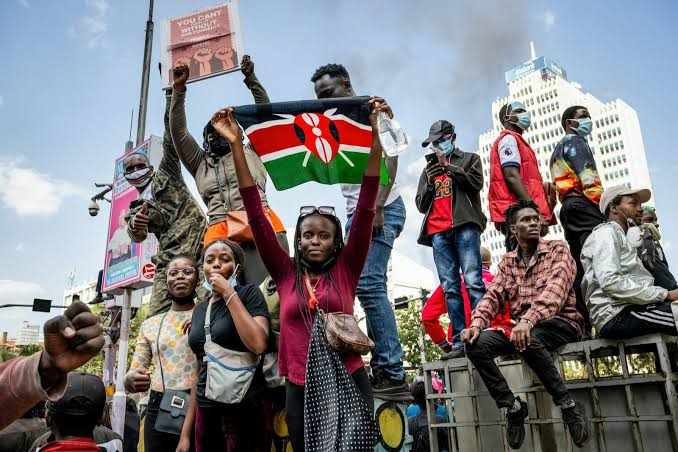
The Mwelekeo Insights public opinion poll has shed light on how Kenyans aged 30 and above view the actions of Generation Z following the June 2024 protests.
Conducted between March 1 and March 20, 2025, the survey involved 16,800 participants from all 47 counties.
Its aim was to understand older Kenyans’ opinions on the younger generation in areas such as politics, work ethic, cultural values, and their overall impact on society.
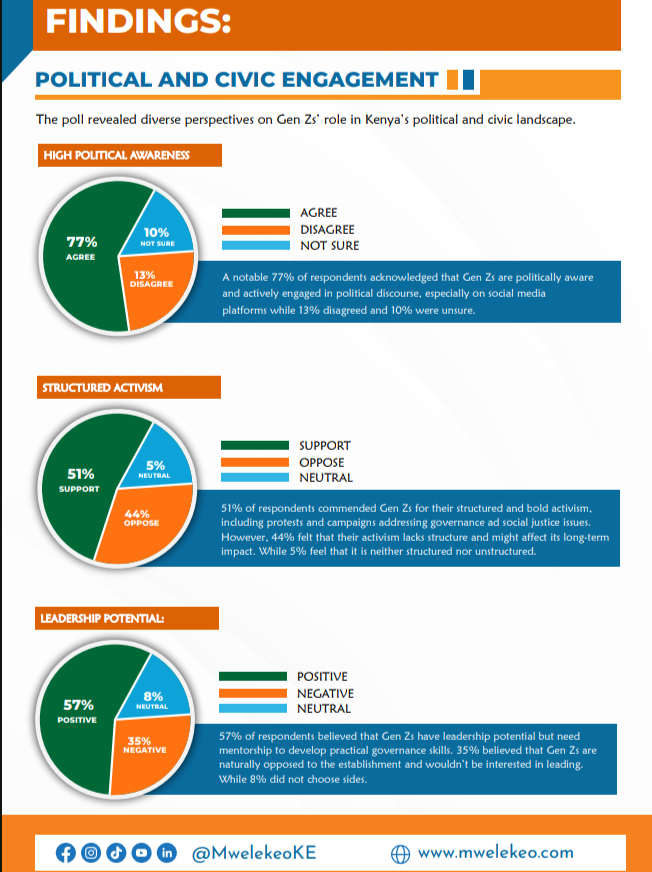
One of the standout findings is that 51% of respondents praised Gen Z for their bold and structured activism, particularly during protests and campaigns that challenged governance issues and promoted social justice.
This support reflects a noticeable shift in perception, as Gen Z had often been dismissed in the past as disengaged from national matters.
The protests appear to have demonstrated to many older Kenyans that the younger generation can mobilize effectively and make their voices heard.
However, the poll also showed that 44% of respondents feel that Gen Z’s activism lacks structure and may not have lasting impact if not well organized.
Another 5% were neutral. This divide suggests that while many older Kenyans appreciate the courage shown, they still believe that future activism must be better planned to achieve long-term results.
Mwelekeo Insights attributed the mixed views to generational differences older Kenyans often value traditional methods of advocacy, while Gen Z relies heavily on digital tools such as social media for coordination and outreach.
Beyond activism, the survey explored Gen Z’s potential for leadership.
It found that 57% believe the younger generation has leadership potential but needs guidance and mentorship to gain practical governance skills. On the other hand, 35% think Gen Z is more interested in opposing the system than in leading it, while 8% were undecided.

The results also reveal a distinct urban-rural gap: in urban areas, 68% see Gen Z as a force for positive change across social, economic, and political spaces, with only 14% expressing mixed feelings.
In rural areas, 52% share this optimism, but 34% disagree, possibly due to differences in access to information or direct experiences with activism.
On work ethic, the findings challenge common stereotypes.
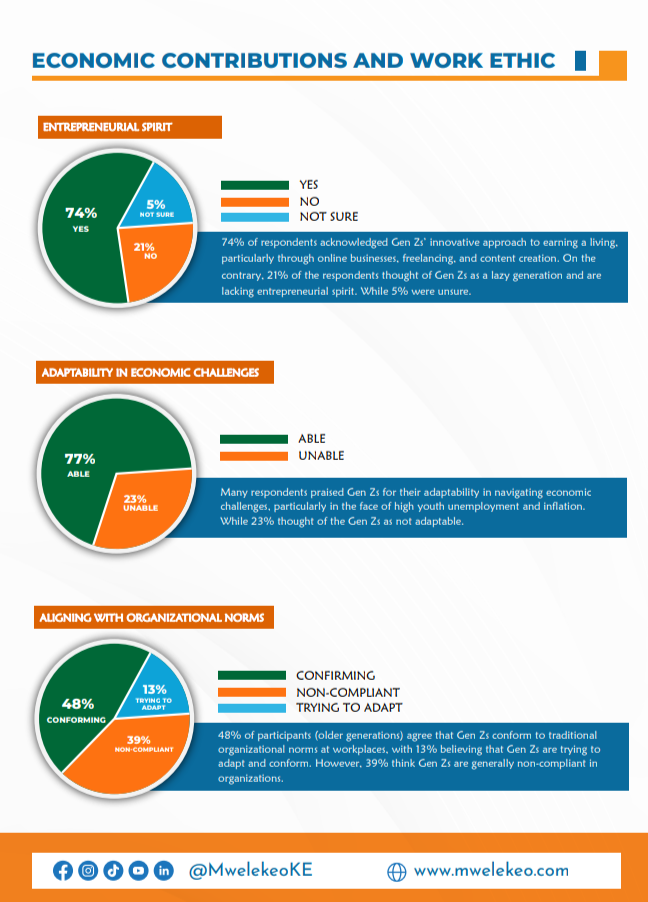
While 21% of older Kenyans still view Gen Z as lazy and lacking entrepreneurial spirit, 74% acknowledge their innovative ways of earning income through online work, freelancing, and content creation.
This shows growing recognition of non-traditional forms of employment.
Politically, 77% agree that Gen Z is highly active on social media, with only small portions disagreeing or uncertain.
Socially, 68% see Gen Z as champions of inclusivity in gender equality and technology, though 31% feel they push too hard against established norms.
The poll also highlighted the influence of income and location on opinions. Higher-income respondents were more likely to view Gen Z as entrepreneurial, while lower-income groups were more skeptical.
Mwelekeo Insights recommended more dialogue between generations, suggesting forums where young and older leaders can share ideas and work together.
The findings reveal both admiration and concern, but overall they point to a valuable opportunity for cooperation that could strengthen Kenya’s social and political fabric in the years ahead.





Leave feedback about this