

The collapse of the case against Prof. Amukowa Anangwe has exposed a deeper issue in Kenya’s fight against corruption the weaponization of the Ethics and Anti-Corruption Commission (EACC) for political reasons.
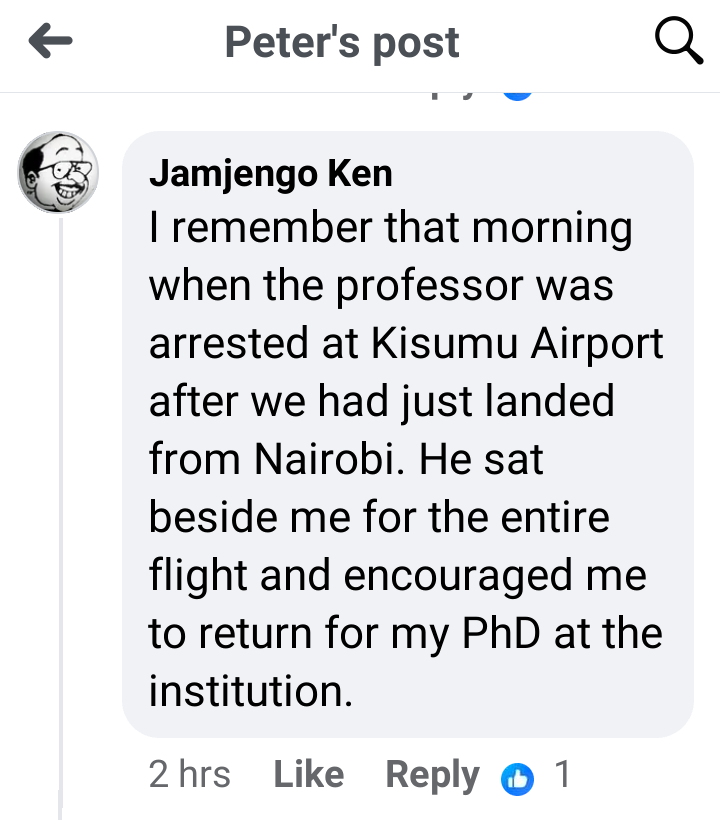
Prof. Anangwe, who served as the Chair of the University of Nairobi Council, was arrested and charged with abuse of office in May 2025.
The accusation was based on his alleged irregular appointment of Daniel Brian Ouma Okeyo as the Acting Chief Operations Officer. The case attracted national attention, but it now appears the charges were not only weak, but politically driven.

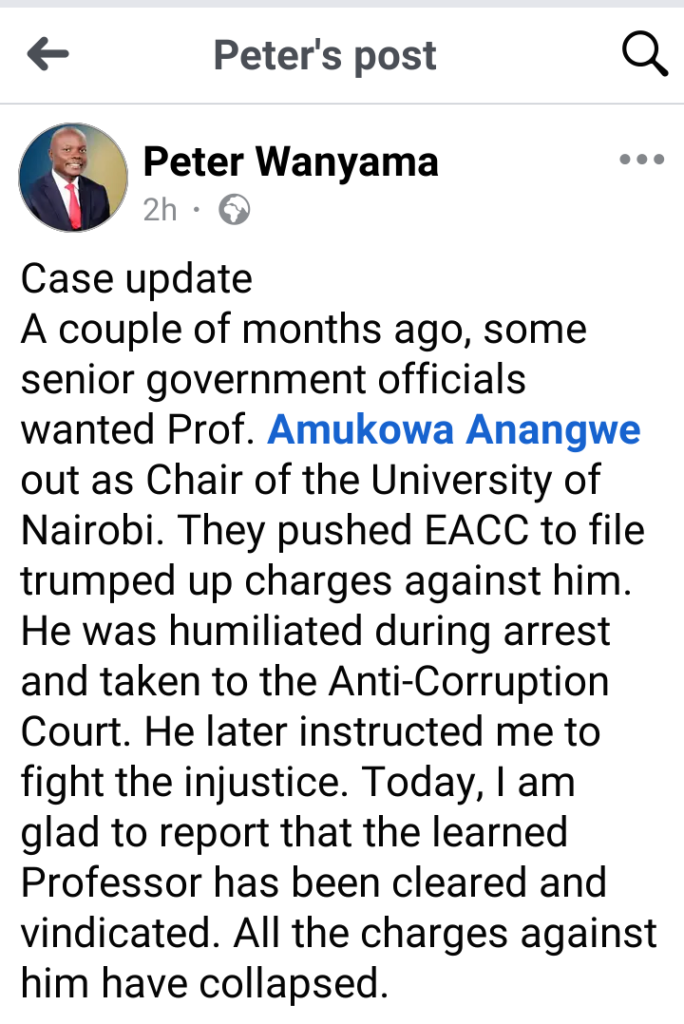
Evidence suggests that senior government officials played a role in pushing for his arrest and removal from office.
The timing of the charges, the nature of the allegations, and the events that followed point to a well-planned effort to get him out of the way.
Prof. Anangwe was forced to resign just ten days after his arrest, despite the matter still being before the courts. This clearly shows that the real intention was not justice, but political control of the university’s leadership.

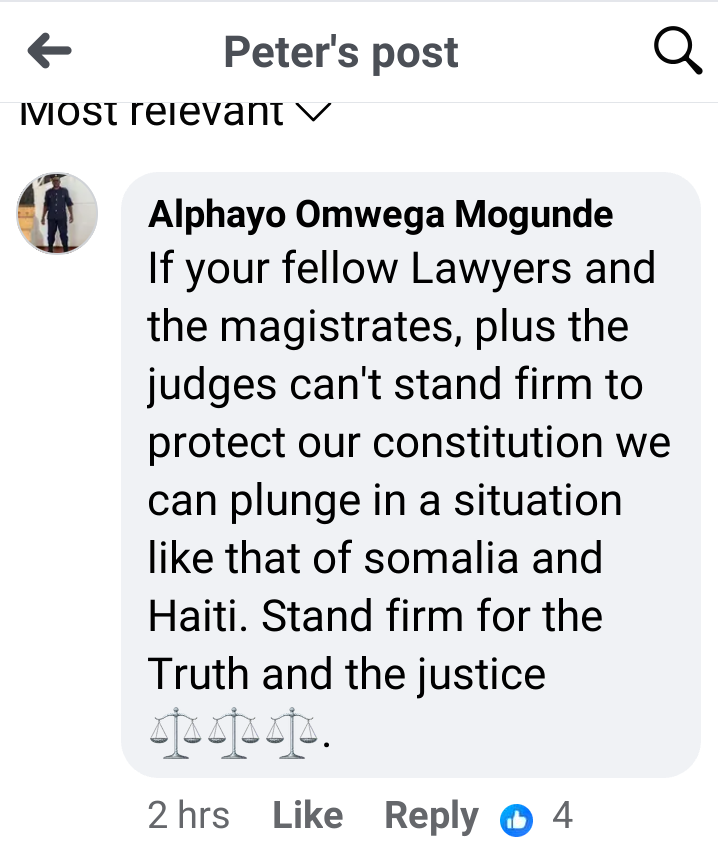
The University of Nairobi has been facing leadership wrangles, and his removal paved the way for other controversial appointments to go through without resistance.
The EACC, which is supposed to be an independent body, appears to have allowed itself to be used to serve these political interests. Charging someone with a serious offence like abuse of office without strong evidence weakens public trust in the institution.
It becomes even more concerning when the case later collapses in court, proving that there was no solid case to begin with.
In Prof. Anangwe’s situation, the court dismissed all charges, confirming that the accusations were baseless. This outcome has left many wondering how many other public servants have been targeted in similar ways.
This situation also highlights a larger crisis within Kenya’s public institutions. When anti-corruption agencies are seen as tools of the government instead of guardians of integrity, their work loses meaning.

Fighting corruption is not about settling political scores or removing people who don’t align with certain interests. It is about upholding justice and protecting public resources.
The way Prof. Anangwe’s case was handled is a reminder that corruption in Kenya is not just about stealing money it is also about misusing power and institutions for personal or political gain.
Prof. Anangwe’s name has now been cleared, but the damage to his reputation and career cannot be undone.
He lost his position, faced public embarrassment, and went through the court process for months, all because of a politically motivated campaign.
This is not just about one individual; it is about a system that allows such injustices to happen. The EACC must be reformed to ensure it cannot be used as a weapon again. Public officials must be protected from political witch-hunts, and anti-corruption efforts must be based on truth and evidence, not politics.This case should serve as a wake-up call.
The rule of law must apply equally to everyone, and institutions like the EACC must work independently without pressure from government offices.
Kenya cannot win the fight against corruption if those in power continue to misuse these institutions to settle scores. Prof. Anangwe’s experience is a lesson on what happens when justice is twisted to serve political ends.
It is time for accountability, not just for corrupt officials, but also for those who misuse anti-corruption bodies for selfish reasons.