
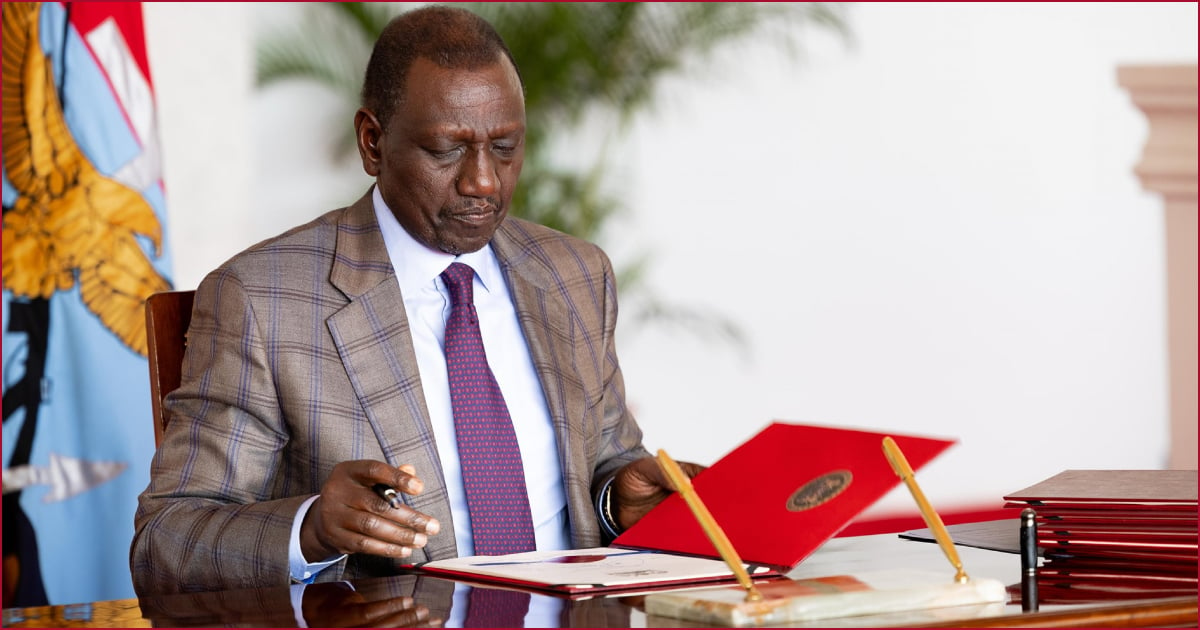
The ruling by the High Court has once again placed President William Ruto’s anti-graft strategy on uncertain ground.
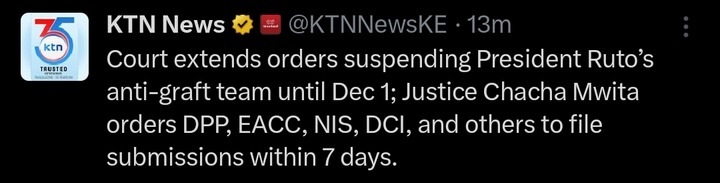
The court extended the suspension of the new anti-corruption team that the President had unveiled earlier in the year.
This means that until December 1, the team will not be allowed to carry out any of its intended operations.
Justice Chacha Mwita, who made the ruling on September 18, explained that the matter needs more time for detailed arguments and submissions from all parties involved before a final judgment can be delivered.
In his directive, the judge asked several key government institutions, including the Office of the Director of Public Prosecutions, the Ethics and Anti-Corruption Commission, the National Intelligence Service, and the Directorate of Criminal Investigations, to provide written submissions within seven days.
These submissions will play a crucial role in helping the court reach a well-considered decision on the legality of the special team.
The suspended group had been introduced by the government as a new way of tackling corruption, especially cases involving powerful individuals and misuse of public funds.
It was presented as a step meant to speed up investigations and prosecutions that in the past have often dragged on for years. However, the team has faced criticism from the very beginning.
Critics say its creation was unnecessary since existing institutions such as the DPP and EACC already have clear mandates to fight corruption.
They believe forming another body only creates confusion and raises questions about overlapping roles.The petition challenging the team’s legality was filed by activists and rights organizations who argue that the President went beyond his constitutional powers.
According to them, the law only allows independent offices like the DPP and EACC to investigate and prosecute corruption cases.
They insist that any attempt by the executive to create a parallel body undermines the independence of these institutions and could weaken the fight against graft rather than strengthen it.
The suspension of the anti-graft team is seen as a major setback for the government, which had marketed it as a fresh beginning in tackling economic crimes.
For now, the suspension means that pending cases and investigations that were supposed to be handled by the new team remain on hold.
The debate over how to effectively fight corruption in Kenya remains alive.
The final outcome of this case will likely set an important precedent on the limits of presidential powers in forming special teams outside the structures provided by the Constitution.


Leave feedback about this