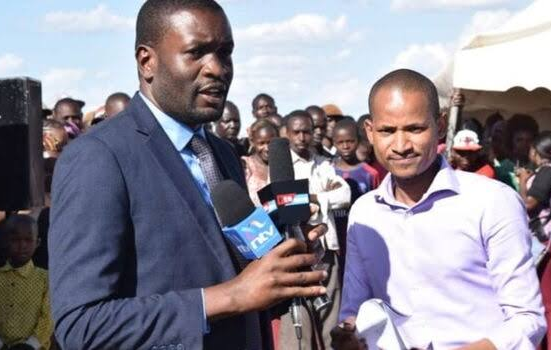


Miguna Miguna has once again raised serious questions about Babu Owino, putting the spotlight on the Embakasi East MP’s long history of controversy as he eyes bigger political ambitions.
Babu Owino is widely known in Kenya as a loud and energetic opposition politician, but his record in and out of court continues to follow him. Miguna Miguna, a lawyer and outspoken activist, recently accused Babu of being involved in serious crimes and said that in a fair justice system, he would be serving a long jail sentence.
These remarks have reignited public debate about Babu’s past and whether he is fit for higher office, especially as he positions himself as a possible Nairobi governor.
Babu Owino’s political journey started during his time as a student leader, where he gained popularity for his bold style and confrontational speeches. Over the years, that same style has helped him build a strong support base, especially among young people in Nairobi.
However, alongside his political rise, he has also been linked to many legal cases that have damaged his public image. Supporters often focus on his activism and charity work, but critics argue that his history cannot be ignored.One of the most serious cases involving Babu Owino happened in 2020 at a Nairobi nightclub.
During that incident, he shot DJ Felix Orinda, popularly known as DJ Evolve. The DJ suffered life-changing injuries and needed long-term medical care. Babu was first charged with attempted murder, a very serious offence.
Later, the charge was reduced to misuse of a firearm. Eventually, the case ended after an out-of-court agreement, where Babu promised to assist with medical bills.
The court later ruled that there was not enough evidence to convict him. Many Kenyans felt uneasy about how the case ended, seeing it as another example of how influential people escape justice.
Apart from the shooting case, Babu Owino has faced several other charges over the years. He has been accused of incitement to violence during political rallies, with claims that his words could have encouraged unrest.
In 2017, he was charged with subversion, a case that later collapsed after the court ruled that the law used was no longer valid. He has also been arrested over incidents involving disorderly conduct and firearms.
None of these cases resulted in a conviction, either because of weak investigations or technical legal issues. This pattern has fueled claims that the system works differently for powerful politicians.
Miguna Miguna’s recent comments were blunt and harsh. He accused Babu of being involved in criminal networks and claimed the media often downplays his past. On social media, Miguna argued that Babu should not be allowed to run for public office given his record.
These remarks divided public opinion. Some Kenyans agreed, pointing to past incidents such as the 2018 case where Babu was arrested after allegedly assaulting a voter. Others believe that money and influence helped him walk free in the DJ Evolve case.
Babu Owino has tried to rebrand himself. He is now a trained lawyer and often appears in court defending protesters and speaking about human rights. He presents himself as a champion of the poor and the youth. Still, reminders of his past keep resurfacing.
Articles and public discussions continue to list his previous cases and ask why none of them ever led to punishment.
Even as he positions himself to run for Nairobi Gubernatorial seat, these issues are unlikely to fade.
Many voters are asking whether leadership should come with a clean record and accountability. While Babu Owino has survived politically and legally so far, trust remains a major challenge.