
Former Deputy President Rigathi Gachagua has accused the Independent Electoral and Boundaries Commission (IEBC) leadership of pushing an election technology procurement that he claims could affect the credibility of the 2027 General Election.
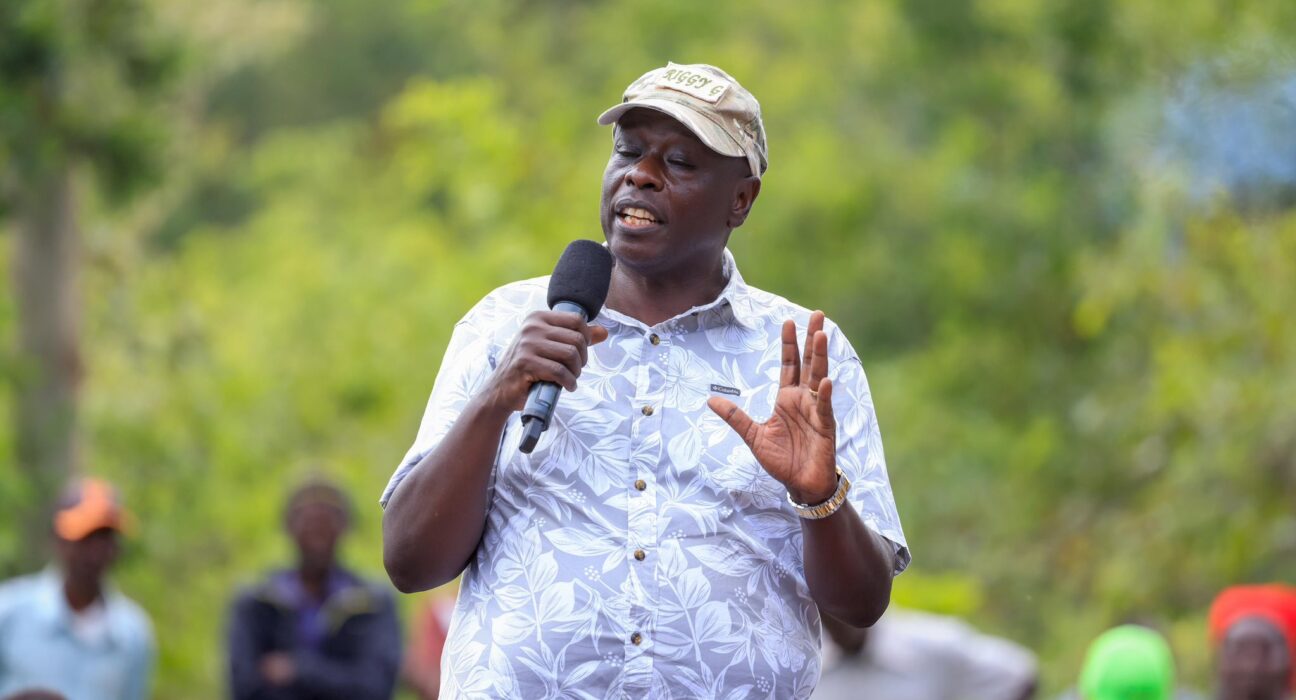
In a strongly worded statement shared on Facebook on Tuesday, September 1, 2026, Gachagua, who leads the Democratic Congress Party (DCP), directly criticised IEBC Chairman Erastus Ethekon and his Vice Chairperson over the proposed introduction of new election technology supplied by South Korea-based MIRU Systems.
Gachagua alleged that the procurement process had been structured in a way that would favour MIRU Systems.
He questioned why the electoral agency would seek to introduce a new system at a time when preparations for the 2027 election are already entering a critical stage.
The former deputy president claimed that some IEBC officials had raised concerns about specifications contained in the tender.
According to him, officials from the Directorate of Supply Chain Management and the Directorate of Electoral Management were allegedly pressured to take responsibility for specifications that they believed were irregular.
Gachagua said the officials declined to endorse the specifications and also refused to give what he described as false evidence during proceedings before the Public Procurement Administrative Review Board.
He further alleged that some of the officials were later transferred to counties far from their previous work stations. He claimed that their positions were subsequently filled by individuals he described as close to the current IEBC leadership.
According to Gachagua, the affected officials reached out to him while he was on holiday and asked him to raise the matter publicly. He said their concerns deserved the attention of Kenyans because election technology is closely connected to the management and credibility of the electoral process.
Gachagua said he hoped the Public Procurement Administrative Review Board would examine the allegations and cancel the tender if it finds that the procurement process did not meet the required standards.
His criticism also focused on the timing of the proposed change. With the 2027 General Election only months away, Gachagua questioned whether IEBC has enough time to introduce an entirely new election management system, test it properly and correct any problems that may emerge before voters go to the polls.He argued that introducing a new system would require significant digital migration.
Such a process, he said, would need adequate time for testing, training and identification of technical weaknesses.
The former deputy president also raised concerns about the possible effect of the technology change on the voters’ register. He particularly questioned what could happen in areas where President William Ruto has faced strong political opposition.
The voters’ register is one of the most sensitive parts of an election because it determines who is eligible to participate. Any changes to the systems used to manage voter information are therefore likely to attract close public and political scrutiny, particularly ahead of a closely contested national election.
Gachagua’s position is that IEBC should avoid replacing the existing election management system at this stage and instead improve the current technology. He argued that identified weaknesses can be addressed without introducing the risks that may come with a major system change close to the election.
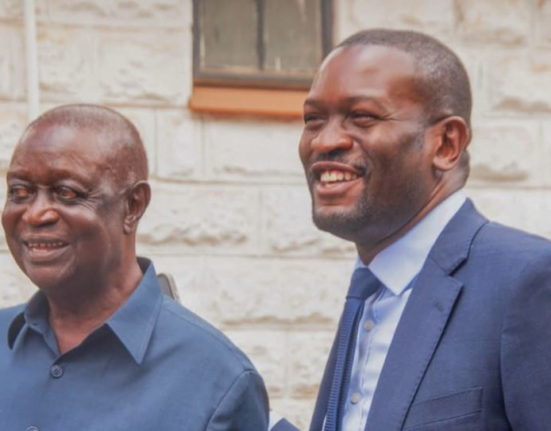
His strongest criticism was directed at Ethekon and his deputy. Gachagua accused the two of victimising officials who, according to him, had chosen to maintain professional standards rather than approve what he described as manipulation and corruption.
He called on the IEBC leadership to stop what he characterised as harassment of staff and warned that such actions could damage public confidence in the electoral body.
Gachagua also appealed to the commission to protect the independence and integrity of its processes as preparations for the next election continue. He maintained that the electoral body must operate in a manner that gives all political players and voters confidence that the final results will reflect the choices made at the ballot.
“Do not subvert the will of the people of Kenya,” Gachagua said, stressing that Kenyans should ultimately be allowed to decide their leaders through the ballot.
The allegations place election technology firmly among the issues likely to dominate political debate ahead of the 2027 General Election.
Questions surrounding procurement, the voters’ register, system security and the independence of IEBC are expected to receive increasing attention as the country moves closer to the polls.
The Public Procurement Administrative Review Board is expected to provide an avenue for examining the disputed tender and determining whether the procurement process complied with the law.For IEBC, the controversy comes at a sensitive time.
The commission faces the responsibility of preparing for an election that requires extensive planning, including voter registration, technology testing, procurement, staff training and public communication.
The debate over MIRU Systems therefore goes beyond the choice of a technology supplier. It has raised broader questions about how election-related decisions are made, how concerns raised by officials are handled and whether the commission can introduce major changes while maintaining public confidence.
With the 2027 polls approaching, the pressure on IEBC to demonstrate transparency and provide clear explanations over its procurement decisions is likely to increase.
For political leaders such as Gachagua, scrutiny of the commission will remain an important part of the wider political debate, while the electoral body will be expected to address concerns through established legal and institutional channels.