
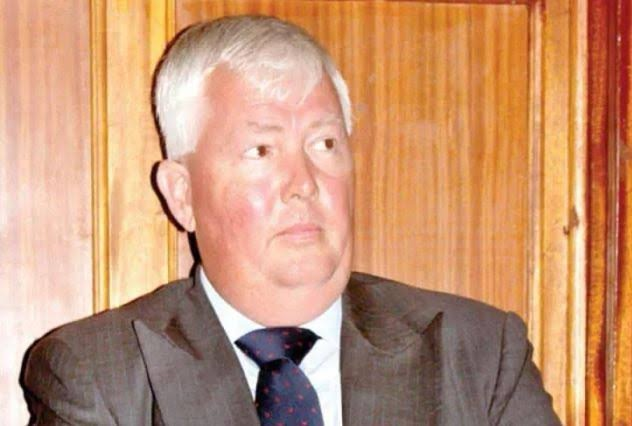
Nairobi lawyer Guy Spencer Elms is facing serious legal troubles as a court has ordered him to enter a plea in a land dispute in Karen valued at over Sh100 million.
The charges against him include forgery, presenting false documents, and attempting to unlawfully acquire property that belonged to the late British businessman Roger Robson.
This case has intensified after Elms repeatedly ignored court summons, forcing intervention from the Attorney General and the Director of Public Prosecutions to ensure he faces legal accountability.
Businesswoman Agnes Kagure claims rightful ownership of the land, and the dispute highlights the ongoing challenges of inheritance and property rights in Kenya’s high-end estates.
Elms, a British-born lawyer practicing in Kenya for several years, is accused of forging Robson’s will and creating false legal documents to position himself as a beneficiary or executor of the estate.
Court documents indicate that signatures were allegedly forged and powers of attorney falsified to support his claim.
These allegations are not new for Elms, who has faced similar accusations in previous disputes, raising questions about his professional conduct and ethics.
The Directorate of Criminal Investigations has been actively investigating the matter, uncovering evidence that suggests a deliberate attempt to manipulate the legal system to secure high-value assets.
In addition to the Karen case, Elms is also implicated in another major dispute over a property in Kwale County. He is accused of forging the will of the late billionaire Pritam Singh Panesar to gain control of a 53-acre beachfront estate in Msambweni.
Alongside businessman Nilesh Kumar Shah, he allegedly presented a disputed title deed containing fake signatures and fabricated records.
The Lands Ministry revoked their ownership claim after detecting irregularities, but Panesar’s daughters continue to challenge the validity of the will naming Elms and Shah as trustees.
Investigations further reveal that Elms may have used counterfeit identification documents to facilitate the transfer, indicating a coordinated effort to defraud the estate.
These cases expose a concerning pattern in Elms’ career, where he appears repeatedly linked to attempts to seize estates through falsified documents.
Public records describe him as a “serial forger,” with multiple contested wills surfacing in court.
The Kwale and Karen disputes have drawn widespread attention because of the value of the properties and the apparent manipulation of legal processes.
Allegations of document forgery, fabricated powers of attorney, and fraudulent claims have not only affected the victims but also eroded public trust in Kenya’s legal system.
Elms’ failure to honor court summons has already led to a warrant for his arrest, and although his legal team cited medical treatment in London and family obligations abroad, prosecutors argue that he deliberately avoided appearing.
Online discussions and public outcry continue to demand accountability, with hashtags highlighting the fight against land fraud in Kenya gaining traction.
His repeated involvement in these disputes has tarnished his reputation, presenting him not as a defender of the law but as someone allegedly exploiting it for personal gain.
The spotlight remains on Elms, with the public and authorities watching closely to see if justice will finally be served in these high-profile land disputes.



Leave feedback about this