
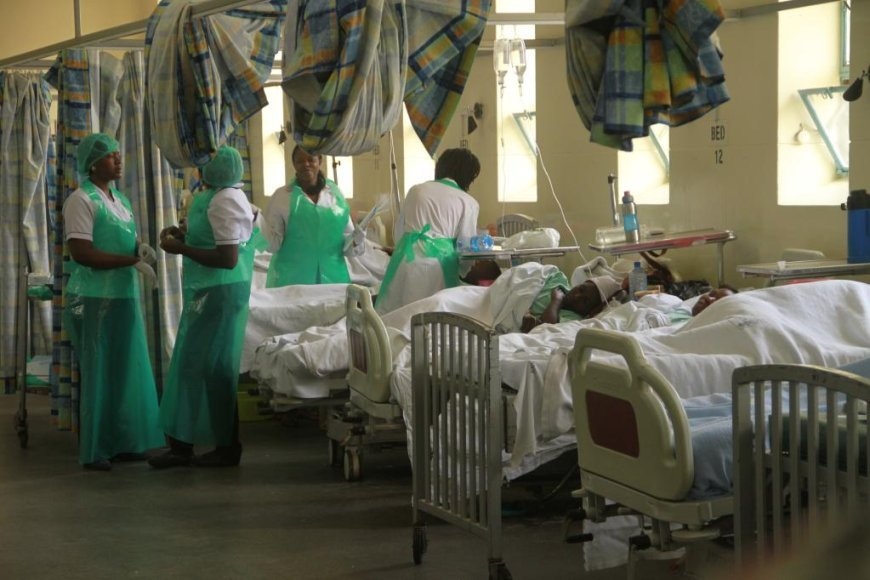
Health officials in Narok County are battling a cholera outbreak that has already claimed four lives and left dozens hospitalized.
The victims, including three adults and one child, were from Mgingo, Majengo, and Oldonyo Rasha villages.
The outbreak has sparked fear among residents, as 31 more people are receiving treatment in different hospitals across the region.
According to Narok County Chief Officer for Preventive and Promotive Health Services, Lucy Kashu, the disease has hit Kilgoris Central, Shankoe, and Lolgorian wards in Trans Mara West and South sub-counties.
The first suspected cases were reported on September 29, 2025, at Trans Mara West Sub-County Hospital, where eight patients were admitted with severe diarrhoea.
Tests conducted both at the local hospital and at the Walter Reed Kericho Laboratory later confirmed cholera infection on October 3, 2025.
By Friday, October 3, twelve patients remained in hospital five men, five women, and two children while fifteen others had been treated and discharged.
The county government has since activated its Public Health Emergency Operations Centre to coordinate the response and deployed rapid response teams to the affected villages.
To contain the outbreak, a temporary cholera treatment unit has been established at Trans Mara West Sub-County Hospital.
Health officials have also begun door-to-door awareness campaigns, teaching families how to prevent infection through hygiene practices and safe water use.
The county has partnered with Water, Sanitation, and Hygiene (WASH) organizations to improve access to clean water and proper sanitation, which are critical in stopping further spread.
Kashu noted that poor sanitation remains a major cause of such outbreaks and warned that around 38 million Kenyans are still at risk of contracting preventable diseases linked to unsafe water and hygiene.
She urged residents to boil or treat their drinking water and to seek medical attention immediately if they experience symptoms such as diarrhoea, vomiting, or dehydration.
Kashu emphasized that cholera can spread quickly in communities with limited clean water, open defecation, and poor waste disposal systems.
The county government, in collaboration with the national Ministry of Health and humanitarian partners, is also scaling up emergency communication and laboratory testing to track new infections and prevent new clusters from emerging.
Kenya has been listed as a high-priority nation under the Cholera Continental Preparedness and Response Plan for Africa 1.0.
In 2025 alone, the country recorded 426 cases and 20 deaths from cholera, affecting counties such as Kwale, Migori, Kisumu, and Nairobi.
Weak WASH infrastructure, particularly in border regions and urban slums, continues to raise transmission.
The African Union has called for coordinated efforts to eliminate cholera in Africa by 2030. The campaign, endorsed by Zambia’s President Hakainde Hichilema in June 2025, has seen countries including Kenya commit to investing in clean water systems and vaccination drives.
Kenya has allocated Ksh476.4 million from a Ksh35.5 billion continental fund to improve sanitation, strengthen surveillance, and carry out vaccination campaigns.
The aim is to reduce cholera cases across Africa from over 200,000 annually to fewer than 50,000.




Leave feedback about this