
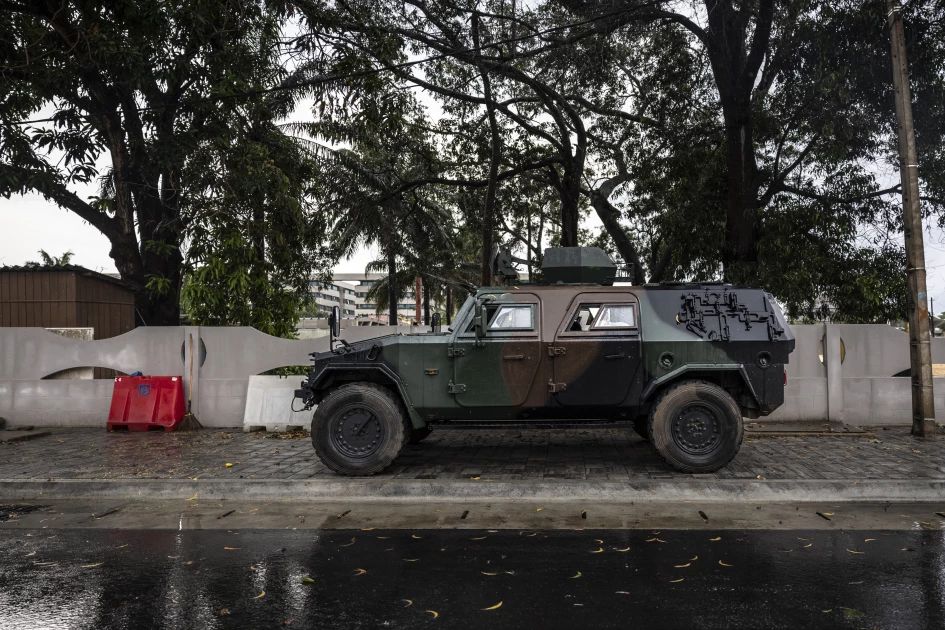
Calm was slowly returning to Benin after a tense weekend marked by a failed attempt to overthrow the government, even as security forces continued searching for soldiers believed to be behind the plot.
By Monday, authorities said several suspected coup participants had been arrested, while others were still on the run, possibly hiding in rural areas.
Life in the country’s economic hub of Cotonou appeared to return to normal by Monday afternoon. Traffic was flowing again, shops were open, and there were no signs of public unrest, according to journalists on the ground.
This came a day after a group of soldiers had shocked the nation by going on state television to claim they had removed President Patrice Talon from power.
The situation changed later on Sunday when President Talon addressed the nation in a televised message. He assured citizens that the government remained in control and that the attempted takeover had been stopped.
The government later confirmed that violent fighting had broken out between the rebellious soldiers and the Republican Guard at the president’s residence in Cotonou. These clashes resulted in deaths on both sides, including the wife of General Bertin Bada, the president’s military chief of staff.
According to military sources loyal to the government, at least a dozen people linked to the coup attempt had been detained by Monday.
They also confirmed that all hostages taken during the incident had been freed. Among those held briefly were two senior officers, army chief Colonel Faizou Gomina and Chief of Army Staff Abou Issa, both of whom were released overnight.
Security forces continued to hunt for those still missing, including the alleged leader of the coup attempt, Lieutenant Colonel Pascal Tigri.
Officials said they could not yet give exact numbers of those involved but believed many suspects had fled the capital during the chaos.
The unrest prompted a swift regional response. Nigeria announced it had carried out military actions in Cotonou and deployed troops to support the Beninese government.
The West African regional bloc ECOWAS also said it would send forces from several member states, including Ghana, Ivory Coast, Nigeria, and Sierra Leone, to help protect constitutional order.
A planned ECOWAS meeting in Abidjan was cancelled, though the bloc strongly condemned the attempted takeover, along with the African Union, the United Nations, and France.
President Talon, 67, is nearing the end of his second and final term and is expected to step down in April, as required by the constitution.
His government has pointed to this transition as proof of stability, even as critics accuse him of ruling in an authoritarian manner. The upcoming election has already faced controversy, with the main opposition Democrats party excluded over sponsorship requirements.
Despite this, the party publicly rejected the coup attempt, calling instead for dialogue and peaceful political engagement.
The failed plot comes at a time when West Africa has seen a surge in military takeovers, particularly in neighboring countries such as Niger, Burkina Faso, and Mali. Benin itself has a long history of coups since gaining independence from France in 1960, making this latest incident a painful reminder of the nation’s fragile political past.
Leave feedback about this