
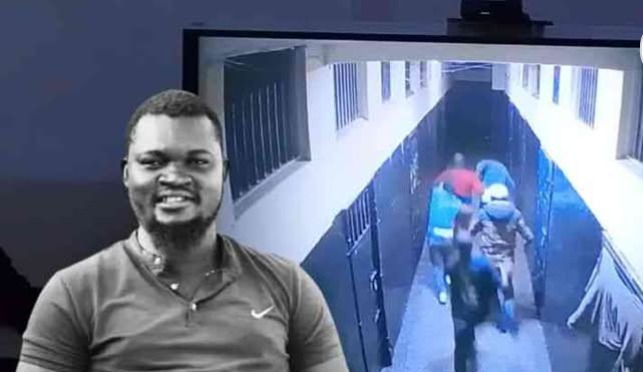
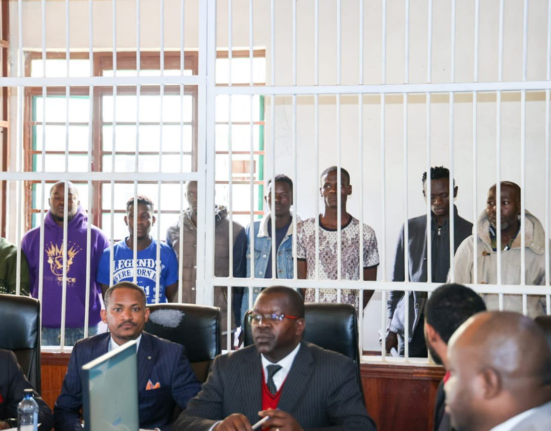
Drama unfolded in court during the hearing of the Albert Ojwang case after a protester interrupted the proceedings by loudly demanding the arrest of Deputy Inspector General Eliud Lagat.
The man stood up in the courtroom and repeatedly shouted, “Arrest Eliud Lagat!” before security officers quickly intervened. His outburst briefly disrupted the proceedings, drawing the attention of the judge, lawyers, journalists, and members of the public who had gathered to follow the closely watched case.
Court security officers moved swiftly to remove the activist from the courtroom, allowing the hearing to resume after a brief interruption. The incident highlighted the intense public interest surrounding the case, which has continued to generate widespread debate across the country.
The protest came as investigators continued presenting evidence related to the death of Albert Ojwang. Among the material discussed in court was restored CCTV footage that investigators say could help establish the sequence of events and identify individuals connected to the incident.
Prosecutors indicated that the footage forms part of the evidence they are relying on as the case progresses.
The courtroom disruption reflected growing public calls for accountability. However, no court has found Eliud Lagat criminally responsible in relation to Albert Ojwang’s death, and no charges should be assumed unless they are formally brought by the relevant authorities.
Any decision to charge an individual rests with investigators and the Office of the Director of Public Prosecutions, based on the available evidence.
Following the brief interruption, the court proceeded with the hearing as both the prosecution and the defence continued presenting their submissions. Lawyers on both sides emphasized the importance of allowing the judicial process to proceed without interference or outside pressure.
The Albert Ojwang case remains one of the country’s most closely followed legal proceedings, with many Kenyans keenly awaiting its outcome.
Human rights organizations and members of the public have continued to call for a transparent, thorough, and impartial investigation to ensure that anyone found responsible is held accountable under the law.
The court is expected to examine CCTV footage, witness testimony, forensic findings, and other evidence before reaching any conclusions.
Until a verdict is delivered, all persons mentioned in connection with the case remain presumed innocent unless proven guilty in a court of law.



Leave feedback about this