
Reports from Standard Digital reveal that the government under President William Ruto is facing growing scrutiny after decisions that could end up costing Kenyans billions.
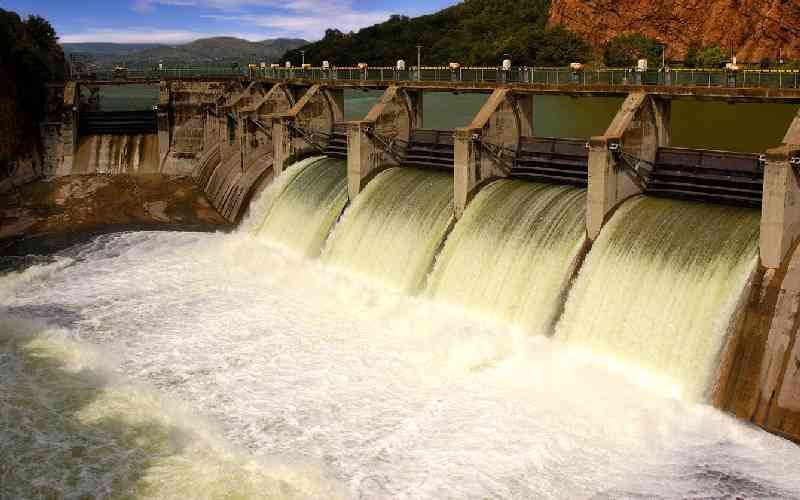
At the center of the controversy is the Grand Falls Dam project, which was initially signed during former President Uhuru Kenyatta’s administration.
The deal involved a British firm, GBM Engineering, which was tasked with building a large dam on the River Tana to increase Kenya’s power supply and strengthen energy security.
What was once presented as a key development project has now turned into a financial and legal dispute with far-reaching consequences.
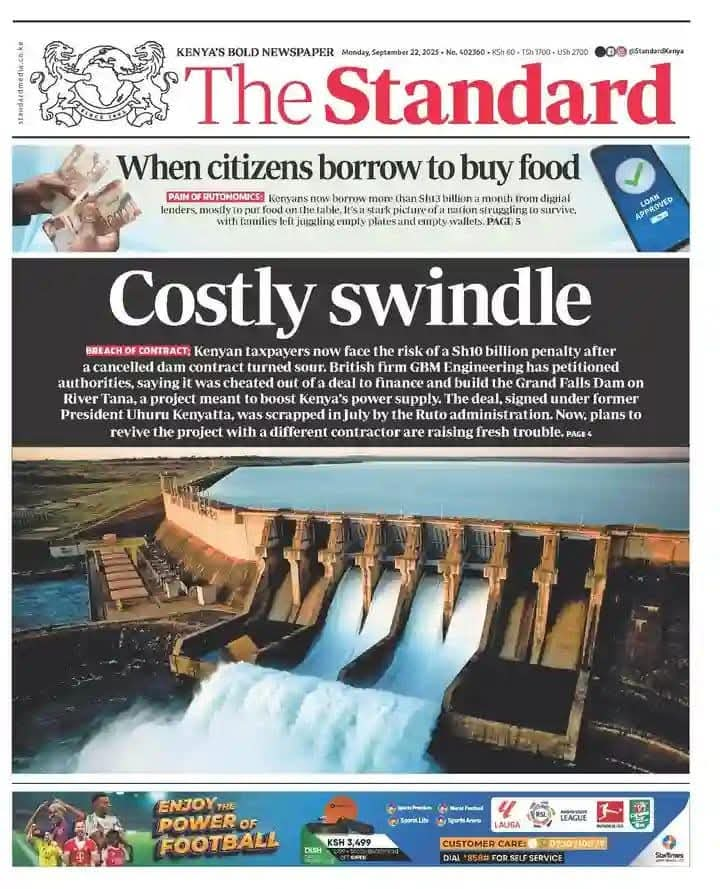
The Ruto administration announced in July that it had cancelled the project, citing failure to comply with the Public Private Partnership Act and weaknesses in the feasibility study carried out by the contractor.
According to the government, the deal lacked proper safeguards, and continuing with it would have posed unnecessary risks to taxpayers.
However, this decision has not closed the matter. Instead, it has opened a new chapter of challenges as GBM Engineering claims it was unfairly removed from the contract.
The company insists that it had followed due process, secured the tender competitively, and even defended its position in earlier legal challenges.
Now, the firm is demanding Sh10 billion as compensation, an amount that could translate into a huge burden for Kenyans if awarded.
This potential penalty has drawn attention to the cost of mismanaged infrastructure deals and the difficulties that arise when government decisions clash with binding contracts.
Observers have pointed out that the case highlights the financial risks Kenya continues to face due to deals signed in previous years, many of which are now being reviewed or cancelled.
Beyond the financial strain, the project’s cancellation has left a gap in Kenya’s energy plans.
The Grand Falls Dam was expected to provide a reliable supply of electricity to support industries and households.
Its stalling now raises questions about how the country will meet future energy demands.
Efforts to revive the project with a different contractor are said to be underway, but this has only created more uncertainty.
New disputes may emerge, making the situation even more complicated.The handling of the dam contract shows the difficult balance between protecting public resources and ensuring that important development projects are delivered on time.
For many Kenyans, the worry is that decisions taken now may not only cost billions but also delay projects that are critical to economic growth.
The outcome of this case will likely shape public trust in how the government manages large-scale infrastructure investments and whether lessons will be learned from past mistakes.
Leave feedback about this