

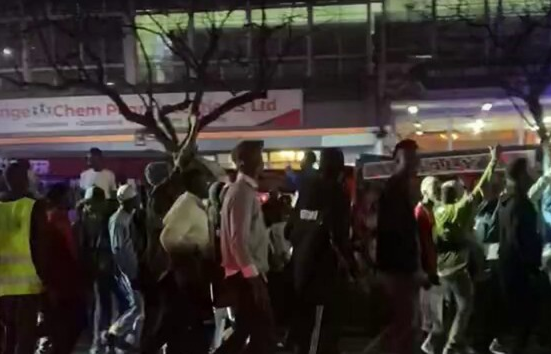
Thousands of football fans who had hoped to cheer Harambee Stars during their CHAN 2024 match against DR Congo were left stranded outside Kasarani Stadium, despite reports that all tickets had been sold out.
What they didn’t know was that most of those tickets never reached the public. Instead, as
The Standard revealed on Monday, August 4, a plan was allegedly put in place by senior figures in the Kenya Kwanza government to control who would attend the game.
The article explained how the state feared that the crowd might erupt into anti-government chants, commonly referred to as “wantam”, especially with the match being televised to a wide international audience.
To avoid any embarrassment, the government reportedly used intelligence findings to identify the risk, then acted by purchasing large amounts of tickets in bulk. These tickets were not made available to the public but were instead given to selected individuals who would pose no threat of protest during the game.
A leaked memo from the State Department for Internal Security showed how public servants, especially from the Kenya Prisons Service, were asked to volunteer for match attendance.
This move was seen by many as an attempt to replace vocal citizens with controlled participants.
It was also reported that some tickets were distributed selectively to residents from government-leaning areas such as Kibra and Mathare.
This raised concerns over political favoritism and interference in what should have been a neutral national event.
Large sections of the stadium remained visibly empty, further fuelling suspicion that the aim wasn’t to support Harambee Stars but to avoid political embarrassment.
The situation angered genuine supporters who had made efforts to attend, only to be turned away without explanation.
Meanwhile, inside the stadium, the crowd appeared subdued, lacking the usual energy and chants that often characterize Kenyan football matches.
The Standard’s report sparked discussions around the politicization of sports in Kenya and the growing concern that even public events are being used to silence criticism.
For many, it was not just about missing a football match but about losing yet another space where they could express themselves freely.
The incident added to a growing list of frustrations that citizens are feeling toward a government that seems more interested in controlling narratives than solving the problems facing ordinary Kenyans.

Leave feedback about this